


This issue is Sponsored By: HZP
The ultimate, patented music player that retunes your music from 440 Hz to 432 Hz, 528 Hz or any other Solfeggio Frequency tuning.
Try it now: https://hzp.co/download
A recent study of 162 students offers a closer look at the body’s response to listening.
Both groups listened for just 20 minutes. But afterward, their saliva showed different patterns: the 528 Hz group had higher levels of CREB protein, while the 432 Hz group had higher levels of GRP78 protein.
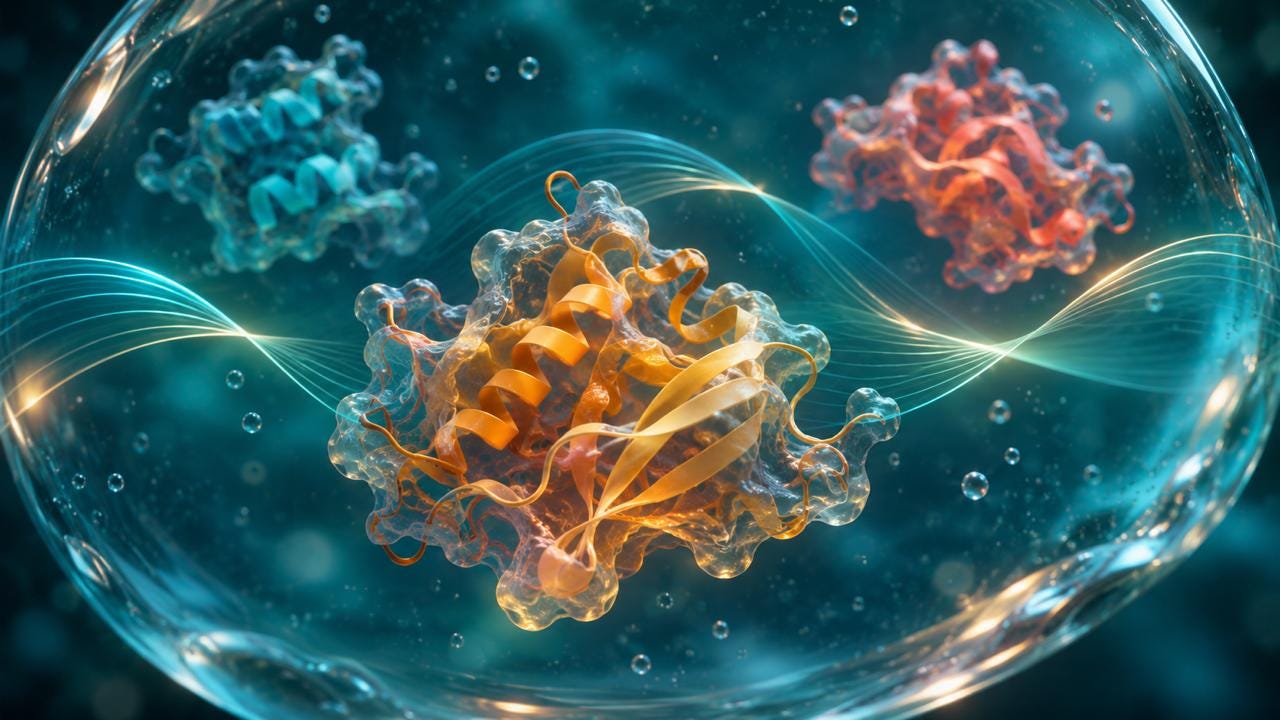
What were researchers measuring—and why does it matter?
A 2026 study published in Brain and Behavior randomly divided 162 university students during exam season into three groups. One listened to instrumental music described as 528 Hz, another listened to music described as 432 Hz, and the third had no music.
Afterward, researchers collected saliva and measured three proteins: BDNF, CREB, and GRP78.
Each offers a different piece of the biological picture.
BDNF: supporting the connections we learn through
Your brain’s connections change as you learn and gain experience. Some strengthen; others reorganize. This flexibility is called neuroplasticity.
BDNF helps support that process by looking after nerve cells and the connections they use to communicate. That makes it interesting to researchers studying learning, memory, and adaptation.
In this study, salivary BDNF was similar in the 528 Hz and no-music groups. The 432 Hz group had significantly lower levels than both.
CREB: helping cells respond to signals - detected in the group who listened to music tuned to 528 Hz
Your DNA contains instructions for making proteins. CREB helps cells activate particular instructions when they receive a signal.
In nerve cells, this process contributes to learning and memory. CREB also helps activate the gene for BDNF, while BDNF can send signals that activate CREB. The two participate in a feedback loop.
Salivary CREB was highest in the 528 Hz group, followed by the no-music group, then the 432 Hz group. All three groups differed significantly.
This makes CREB a particularly interesting finding to follow. Researchers measured its amount in saliva; understanding how that relates to its activity inside cells is a further question.
GRP78: helping cells handle their workload
Proteins need to fold into particular shapes to function. GRP78 helps with that process and helps cells manage proteins that haven’t folded properly.
It’s part of the cell’s maintenance and stress-response systems. A higher reading can reflect a cell responding to a demand, so its meaning depends on the context.
Salivary GRP78 was highest in the 432 Hz group, followed by the no-music group, and lowest in the 528 Hz group. Again, all three groups differed significantly.
Putting it all together
This research is exciting for a few reasons.
While the research still can’t definitively say “528 Hz does this” or “432 Hz does that,” researchers found measurable differences between the groups after just 20 minutes of listening. That alone gives us something worth exploring.
There’s also a bigger story here: curiosity that begins with listeners eventually drives scientific research.
Millions of people are choosing their tuning frequencies, sharing their experiences, and asking questions. When someone notices a difference in how they feel, can science help us understand what’s happening?
I wanted to understand how unusual these findings were. Could other everyday activities also change these proteins in saliva? In one study, salivary BDNF changed after eating a food that required chewing. In another, a single session of intense exercise produced no significant change in salivary BDNF. These findings suggest that this marker can respond to everyday activities, but its response isn’t always predictable. That makes the particular pattern in the music study worth investigating further, especially with peer reviewed studies and independent, agenda free research (rare, but still exists).
For me, the exciting part is the growing conversation between personal experience and measurement. This study offers an early glimpse of different biological patterns after different listening conditions—and a reason to explore how much the frequencies themselves contribute.
We can change what we listen to with the press of a button. Now science is starting to catch up on what we, the people, are learning for ourselves.
Special Announcement: Since we closed the Guild, many of you have reached out to say how much you missed it—a place to learn from one another, connect with people who share your curiosity, keep exploring and growing together.
Your messages inspired us to bring it back.
We’re reopening the Solfeggio Guild as a paid community for curious, independent thinkers who aren’t afraid to question conventional ideas, listen to their inner wisdom, and explore new possibilities together.
Learn more and join the waitlist: https://solfeggioguild.com